
Two drugs, one family
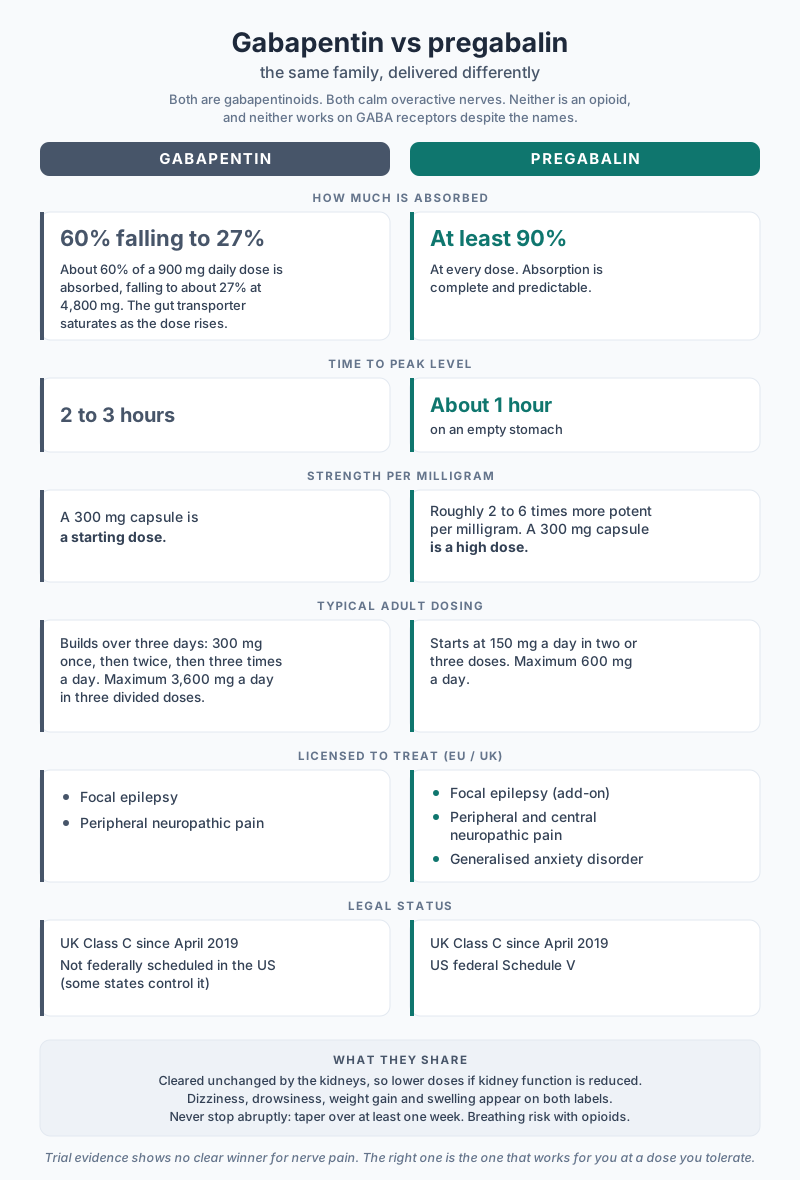
Both drugs are members of a small group of drugs known as gabapentinoids. Both work by binding to the alpha-2-delta subunit of the calcium channels on the membranes of nerve cells, which reduces the release of the chemical messengers that overactive nerves use to send pain signals.
The names of both drugs suggest that they work on GABA, the brain's main chemical messenger that has a calming effect on the brain. They do not. The product information for gabapentin in the UK states quite clearly that gabapentin has no affinity for either of the types of GABA receptors, and does not affect the metabolism of GABA. The names are an accident of chemistry, and any website that compares the two drugs and states that they boost GABA has copied this error.
Neither of these drugs is an opioid, nor does either work in the same way as paracetamol. Both of them act upon the nerves that have been damaged, which helps with the burning, shooting, electric-type pain that ibuprofen does nothing for.
What each one is licensed to treat

The licences for both drugs are not the same, and this represents the first point of genuine difference between the two drugs.
Gabapentin is licenced in the EU and the UK for the treatment of epilepsy with focal seizures, both in combination with other anti-epileptic drugs and as a drug used on its own, as well as for the treatment of peripheral neuropathic pain in adults, such as painful diabetic neuropathy or the pain that lingers after shingles.
Pregabalin has a broader licence than gabapentin. Pregabalin is licenced for both peripheral and central neuropathic pain, meaning that it also covers nerve pain that originates within the brain or spinal cord. Pregabalin is also licenced as an add-on drug to treat focal seizures, as well as for the treatment of generalised anxiety disorder in adults. Gabapentin, however, does not have a licence for anxiety in the EU or the UK.
The absorption difference that decides everything else
Here is the part worth understanding, because everything practical follows from it.
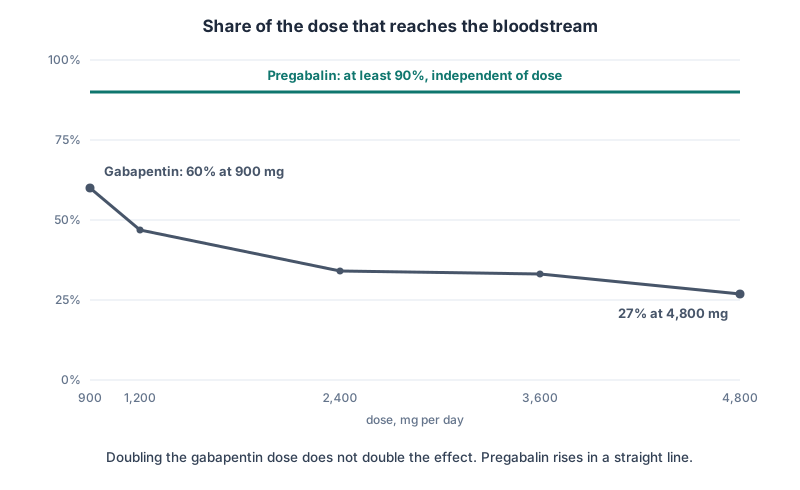
Gabapentin's entry into the bloodstream depends on a transporter in the gut that can only carry so much at a time. Increasing the dose saturates the transporter, limiting the fraction of the tablet that gets absorbed. The American label puts numbers on this: about 60 percent of a 900 mg daily dose is absorbed, dropping to about 27 percent at 4,800 mg a day. Doubling the dose does not double the amount absorbed. Two patients taking the same dose can absorb quite different amounts of the drug.
Pregabalin takes a different route into the bloodstream and is absorbed almost completely. The bioavailability of pregabalin is at least 90 percent of the dose, regardless of the dose amount. Blood levels of pregabalin rise in line with the dose. Pregabalin is also absorbed quickly, reaching the peak concentration in the bloodstream in about an hour when taken on an empty stomach, as opposed to gabapentin's two to three hours.
Pregabalin is the more potent molecule as well. Pregabalin is roughly two to six times stronger on a milligram for milligram basis depending on the measure used; a pharmacokinetic study indicated that the plasma-based figure was around two and a half times stronger. That is why pregabalin doses look small next to gabapentin doses. A 300 mg pregabalin capsule is considered to be a high dose. A 300 mg gabapentin capsule is a starting one.
Dosing: the slow climb against the quicker start
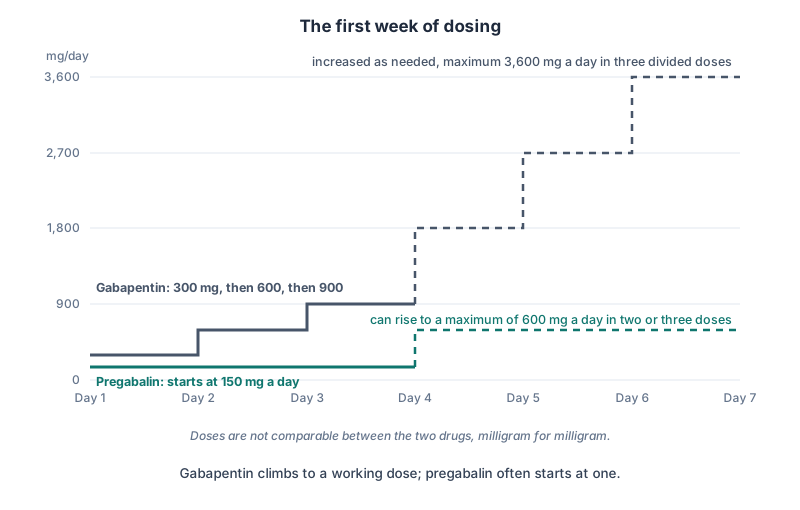
Gabapentin for treating nerve pain begins with a three-day climb in the dosage; 300 mg once on the first day, twice on the second day, three times on the third day, and then the dose can be increased as needed up to a maximum of 3,600 mg per day in three divided doses. It can take several weeks for the gabapentin dose to provide relief to the patient with nerve pain, which is one of the reasons why patients give up on gabapentin before it has a chance to show its effectiveness. The familiar gabapentin 100mg and gabapentin 300mg capsule strengths exist for exactly this stepwise build.
Pregabalin starts at 150 mg daily, divided into two or three doses, but can go as high as 600 mg daily. Because the absorption of pregabalin is complete and predictable, the starting dose is the active dose for some individuals and the dose climb is shorter. Taking it twice a day is also easier than three times a day.
Both drugs leave the body in the same way. Neither is metabolised by the liver; both are excreted in the same form by the kidneys. This means that lower doses are required by individuals with reduced kidney function, and they are less likely to interact with other medications. Neither drug should be stopped abruptly; the product information for both requires a taper over at least one week, whatever it was prescribed for.
Side effects: more alike than the internet says
The side effect profiles are near twins. The European product information for pregabalin lists dizziness and somnolence as its very common effects, with weight gain and peripheral swelling as common ones; the SmPC for gabapentin lists the same four, dizziness, drowsiness, weight gain and oedema, at comparable frequencies.
There are plenty of articles that compare gabapentin and pregabalin and claim that the weight gain and swelling in the ankles that some people experience with pregabalin are problems that gabapentin does not cause. The labels of both drugs disagree. The difference in practice is mostly in timing: pregabalin's side effects arrive faster because the drug does, and for most people both settle after the first weeks at a steady dose.
The law treats them differently, and there is a reason

In the UK both became Class C controlled drugs in April 2019, on the same day. In the United States, however, pregabalin is a federal Schedule V controlled substance while gabapentin remains unscheduled at the federal level, though some states have implemented their own controls over the drug.
Pregabalin attracts the tighter handling in part because of its rapid rate of absorption by the body. Pregabalin reaches its peak concentration in the blood more quickly than gabapentin, leading to greater potential for misuse of the drug. Published reviews of misuse confirm this, especially in individuals who also use opioids. In December 2019, the American regulator mandated the inclusion of warnings regarding breathing difficulties that can result from the combination of either drug with opioids or other sedating medicines, or from either drug being taken by people who already have breathing problems. Neither drug carries a boxed warning in the United States, whatever some pages claim, but the breathing risk is real, printed on both labels, and shared by both drugs.
So which one is better?
There is no honest headline winner. Cochrane reviews of each drug in nerve pain find that both provide good relief for only a minority of those who take them, moderate relief for some more, and no worthwhile relief for over half of those who try either one. There are no head-to-head trials that demonstrate either drug as superior to the other, and the trials that have been undertaken of each drug measured different aspects of pain relief.
The choice between the two drugs is made according to the details outlined above. For instance, pregabalin may be preferred for those with central pain or anxiety, since gabapentin does not have a licence to treat those conditions. Gabapentin's slower build suits some patients fine, and it is less costly in many countries. Those who do not find relief from one drug may be switched to the other by their prescriber. That switch is a prescriber's job, not a self-directed experiment.
Frequently asked questions

What is the difference between gabapentin and pregabalin?
They are two different molecules in the same family, not versions of the same medicine. Pregabalin and gabapentin share the same mechanism of action, the same way they are excreted through the kidneys, and the same predominant side effects. However, they differ in the ways that they are absorbed by the body, how potent they are, how fast they take effect, the conditions for which they are licensed, and the legal status of each. One cannot be swapped for the other tablet-for-tablet, and any change between them needs a prescriber to set the doses.
What is gabapentin used for?
In the EU and the UK, gabapentin is licensed for treating two conditions: focal epilepsy and peripheral neuropathic pain in adults, such as diabetic nerve pain or pain after shingles. Any other use, including anxiety and sleep problems, is off-label. Pregabalin is the one that holds an anxiety licence.
Is pregabalin stronger than gabapentin?
Milligram for milligram, yes, roughly two to six times depending on the measure, which is why the doses are smaller. However, the potency in this case does not necessarily mean that the pain relief is stronger. The two drugs have similar effectiveness in clinical trials at properly adjusted doses; the strength of the drug only matters to the prescribing physician.
Can you take gabapentin and pregabalin together?
Not as a rule. The two drugs work in the same way in the body, so taking them together stacks sedation and dizziness rather than adding a second mechanism. Prescribers overlap them briefly during a supervised switch from one to the other. Outside that situation, taking both should only ever happen on explicit medical instruction.
Can you switch from gabapentin to pregabalin?
Yes, and it is regularly done in cases where the first drug is failing or causing issues for the patient. Since the drugs are absorbed differently by the body, there is no official chart that describes how to convert one to the other, and the switch is usually made gradually. Tapering over at least a week is necessary when stopping either drug, so a switch is planned rather than improvised.
Which is better for nerve pain?
Whichever one works for you at a dose that you tolerate. There is no way of knowing which would work best for you in advance, and the evidence does not show a clear winner between the two drugs. If ordinary painkillers are not helping your burning and shooting pain, then either of these drugs is a step that a doctor might recommend. If one does not work for you, it does not mean the other will not.
About this information
The licensed uses, dosing figures, absorption numbers and warnings for both drugs are taken from the product information for gabapentin in the UK, pregabalin in Europe, the American labels for both drugs and the Cochrane reviews of both drugs for the treatment of neuropathic pain. Where a widely repeated claim contradicts these sources, such as the idea that the drugs work on GABA receptors or that only pregabalin causes weight gain, this page follows the label rather than the claim.
Legal status, driving rules and prices are set nationally, and the position where you live may differ. A pharmacist can tell you which rules apply where you are.
Reviewed by Euro Pharma Care Team