
What is baclofen used for?
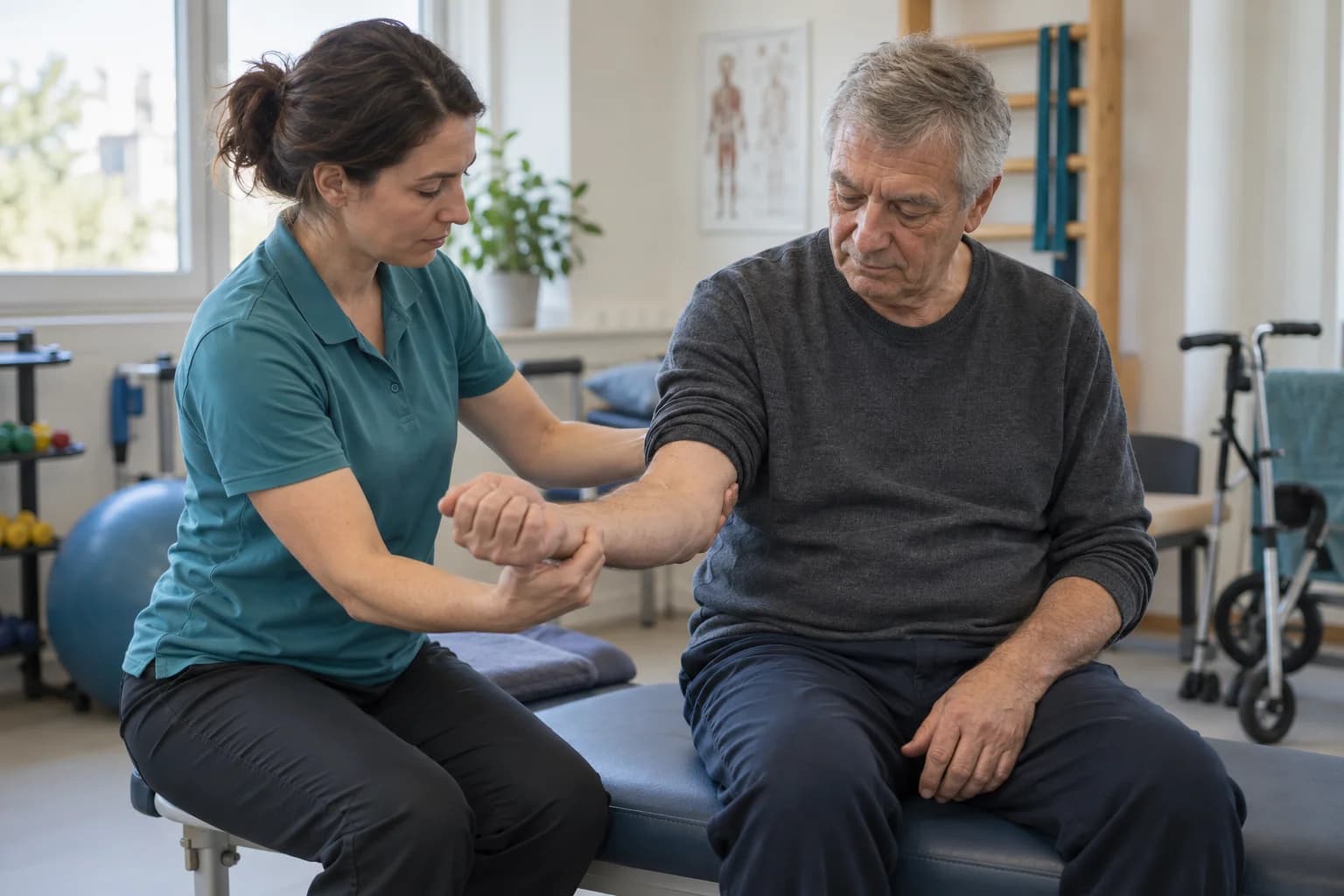
Spasticity. It is the one word that you have to retain. Spasticity has muscles that are tight and stiff, or tighten up on their own because the nerve signal to control them is broken. In the EU product information, the licensed baclofen uses are spasticity from multiple sclerosis, spasticity from spinal cord injury or disease (tumours, syringomyelia, transverse myelitis, motor neurone disease) and damage in the brain itself e.g. cerebral palsy, stroke, meningitis, head injury. Even children with cerebral palsy are covered. All that is outside of this list is off-label apart from one exception. In France a baclofen product Baclocur, indicated to reduce alcohol consumption in adults with alcohol dependence (with maximum dosing of 80mg per day) was approved in October 2018. Following that no other EU country took the plunge.
How baclofen works
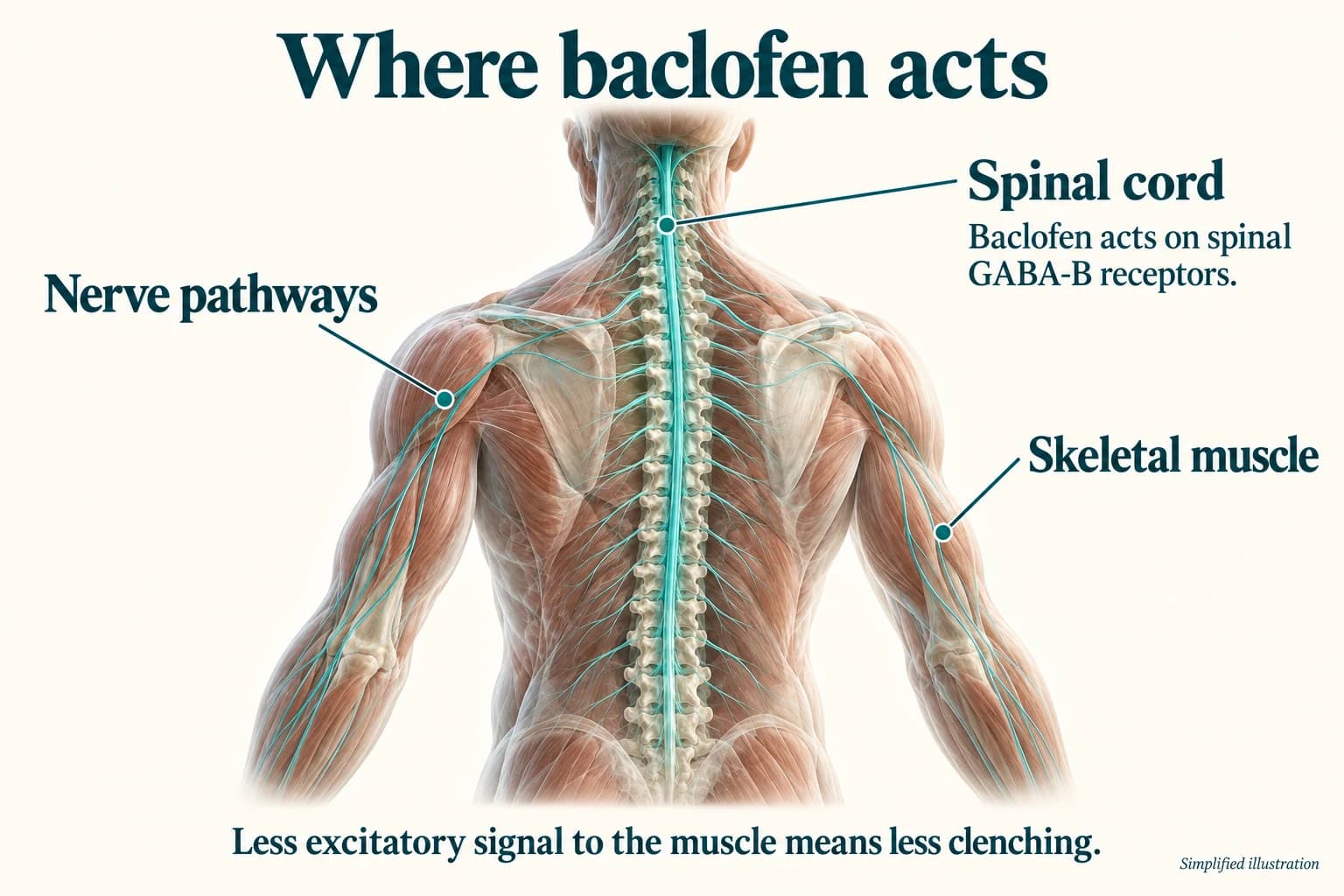
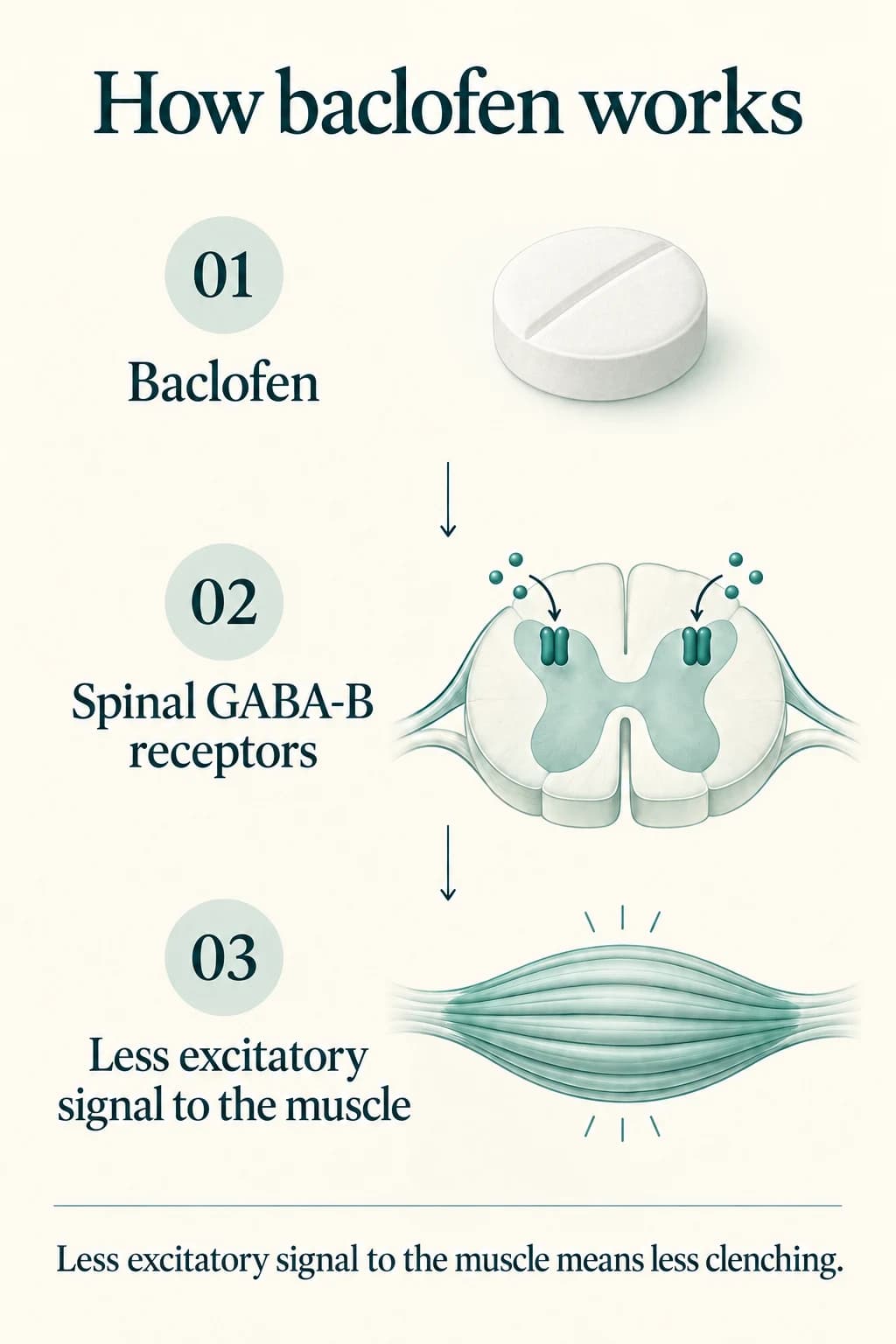
Baclofen is a chemical relative of GABA which is the main calming messenger in the nervous system. It activates spinal GABA-B receptors, and turns off the release of glutamate and aspartate at those nerves, two chemicals that cause muscles to fire. Less excitatory signal to the muscle means less clenching. The tablet is rapidly and completely absorbed from the gut, reaches a peak blood level 30-90 minutes after taking it and has a half life of three to four hours (for this reason it is taken three times daily). About three quarters of a dose departs via the kidneys within 72 hours, mostly unmodified, so kidney function determines what accumulates.
Is baclofen a painkiller?
No. Baclofen itself acts on neither pain pathways and does not carry a license for any form of pain. Now, what it actually does is relax muscles, and spasms hurt; so once a spasm settles down the pain tends to settle down too. That is an indirect effect. In the case of a strained muscle, disc or stiff neck, baclofen is not the standard choice anywhere in Europe and does not appear in product information. The label baclofen muscle relaxant sounds like it covers a sore back. It does not. Baclofen for back pain is an off-label use that has very scant evidence supporting it.
Baclofen side effects
The product information for Lioresal lists sedation, sleepiness and nausea as the most common effects (more than one in ten), but among the common effects (up to one in ten) it includes dizziness, confusion, muscle weakness, low blood pressure, headache, dry mouth, constipation, tremor, insomnia and slowed breathing. A lot of it is worst at the first few days and after each dose increase where it will then settle. The one that ultimately matters for walkers is weakness. The muscle that was too tight can end up too loose.
Does baclofen make you sleepy? Yes. Of all adverse events, sleepiness is the most commonly reported. It is exacerbated by alcohol, sleeping tablets and opioids and pregabalin and the product information advises not driving during sedation, dizziness or blurred vision.
But there is one caveat which stands above the others. Abrupt withdrawal from baclofen can provoke hallucinations, confusion, seizures, tachycardia (racing heart), hyperthermia (high temperature) and spasticity worse than what was present prior to the treatment. When the time comes for the dose to be decreased, it is always tapered gradually over a period of one to two weeks.

How long does baclofen take to work?
The first tablet will be felt within hours; the full effect may take weeks. One dose kicks in within one to two hours, and lasts for just a few. The beneficial effect on spasticity accumulates with dose escalation. The typical ladder begins with 5mg tds for three days, then goes to 10mg tds, then 15mg, then 20mg, holding each step three days. Most people get good control at up to 60mg a day. The product information states that anything over 100mg a day goes to hospital under supervision. Again, this tells you little about the drug after two days at 5mg.
Baclofen 10mg vs 25mg
Same job, same drug, new size tablet. Baclofen 10mg, the tablet with the lowest dose, is used for initiation and titration. It's scored, which means it can be divided into two 5mg portions for the first stage and for those with a kidney function that isn't working well (staying in the 5mg range). Once someone is stable on 50mg to 75mg a day, five to eight small pills is a hassle, and baclofen 25mg was made for that purpose. Three 25mg tablets give 75mg. The 25mg tablet is never the starting point.
There is no baclofen 50mg tablet. Fifty milligrams is a daily total that can be obtained with two 25mg tablets or five 10mg tablets taken throughout the day. As such, any single 50mg baclofen tablet in the EU is an unlicensed product.
Baclofen vs tizanidine
The other oral agent that is utilized for the same spasticity, tizanidine, acts via a different mechanism: alpha-2 receptors rather than GABA-B. A UK Health Technology Assessment review in 2003 pooled four trials that compared the two and found no significant difference in control of spasticity. It is just your tolerance level that makes a difference. Baclofen caused more muscle weakness, tizanidine more drowsiness and dry mouth, and tizanidine also requires liver blood tests in the first months because it can elevate liver enzymes. The selection is normally based mostly on what unwanted side effect someone could tolerate better.
Baclofen vs diazepam
Before baclofen came along and became the go-to muscle relaxant it was diazepam, which is still used for spasticity. Instead of acting on the spinal cord using GABA-B receptors it acts across the whole brain, using GABA-A receptors. This is why the degree of sedation can be more for diazepam at a dose that relaxes muscle, this is why dependence can occur within weeks, and this is why it is a controlled drug in all EU countries. Baclofen is not a controlled substance and does not create the same drug dependence, although actually, the withdrawal response from rapid discontinuance is genuine and described above. Choice is baclofen for long standing spasticity and diazepam as a second line.
Frequently asked questions
Which class of drug is baclofen?
A centrally-acting muscle relaxant, essentially a GABA-B receptor agonist. Not a benzodiazepine, not an opioid, not an anti-inflammatory.
Can baclofen be taken as needed?
Not the way it is licensed. Baclofen is titrated to a stable daily dose and dosed three times a day. So people taking odd tablets when a spasm does occur have hours of effect then a gap, and those who stop and start it have the problem with withdrawal.
How long does baclofen last?
A few hours from one tablet. The half-life is three or four hours so the daily dose is divided into three.
Is baclofen 10mg strong?
No. One 10mg tablet is a low dose, and half of that is what most adults start with. The daily maintenance range is 30 mg to 60mg a day.
Can baclofen be used for nerve pain?
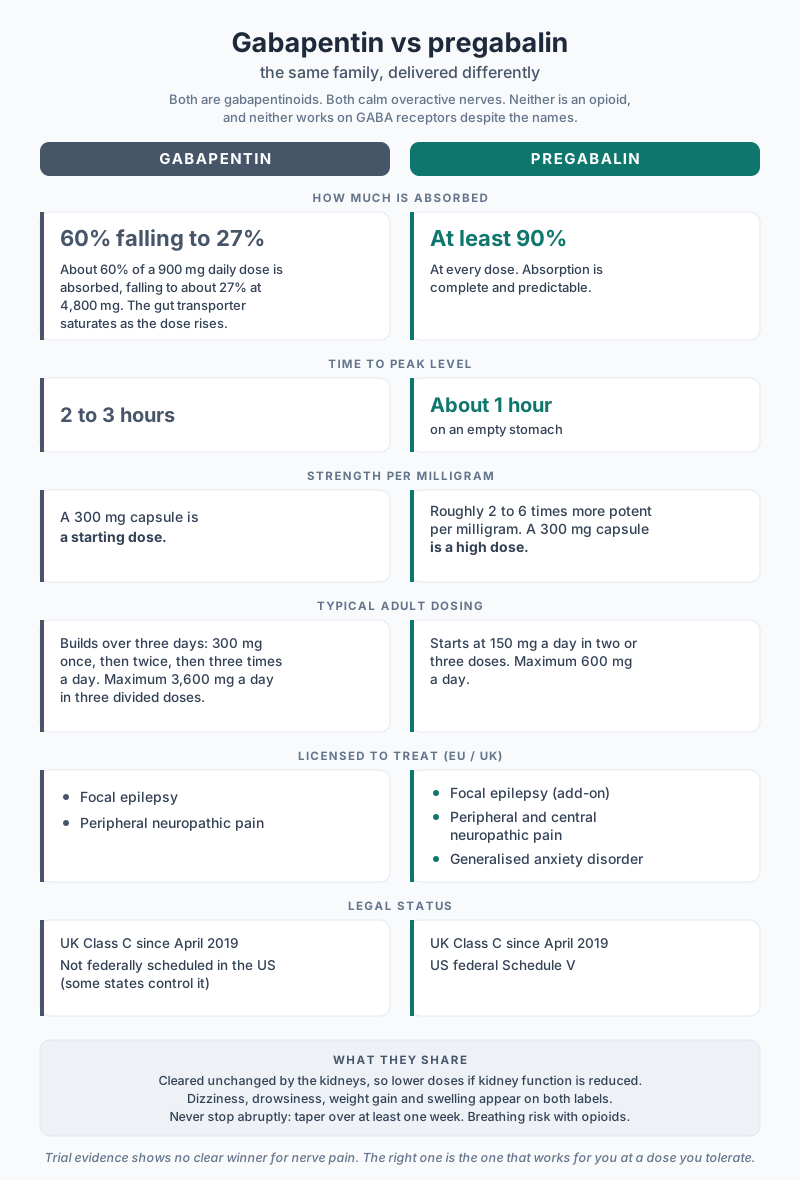
Not licensed as such, and not a painkiller. Gabapentin and pregabalin are the medications we use to treat nerve pain. Baclofen only helps where the pain is coming from a spasm.
Does baclofen help with alcohol dependence?
In France, yes, under the name Baclocur, approved in 2018 at doses of up to 80mg a day for people who drink alcohol heavily and have not responded to other treatments. It is off label everywhere else in the EU and the French regulator said at the time that evidence was not settled.
Questions about Baclofen?
Contact our team about product information. Your prescriber can advise on the strength and treatment suitable for you.
Contact our team