
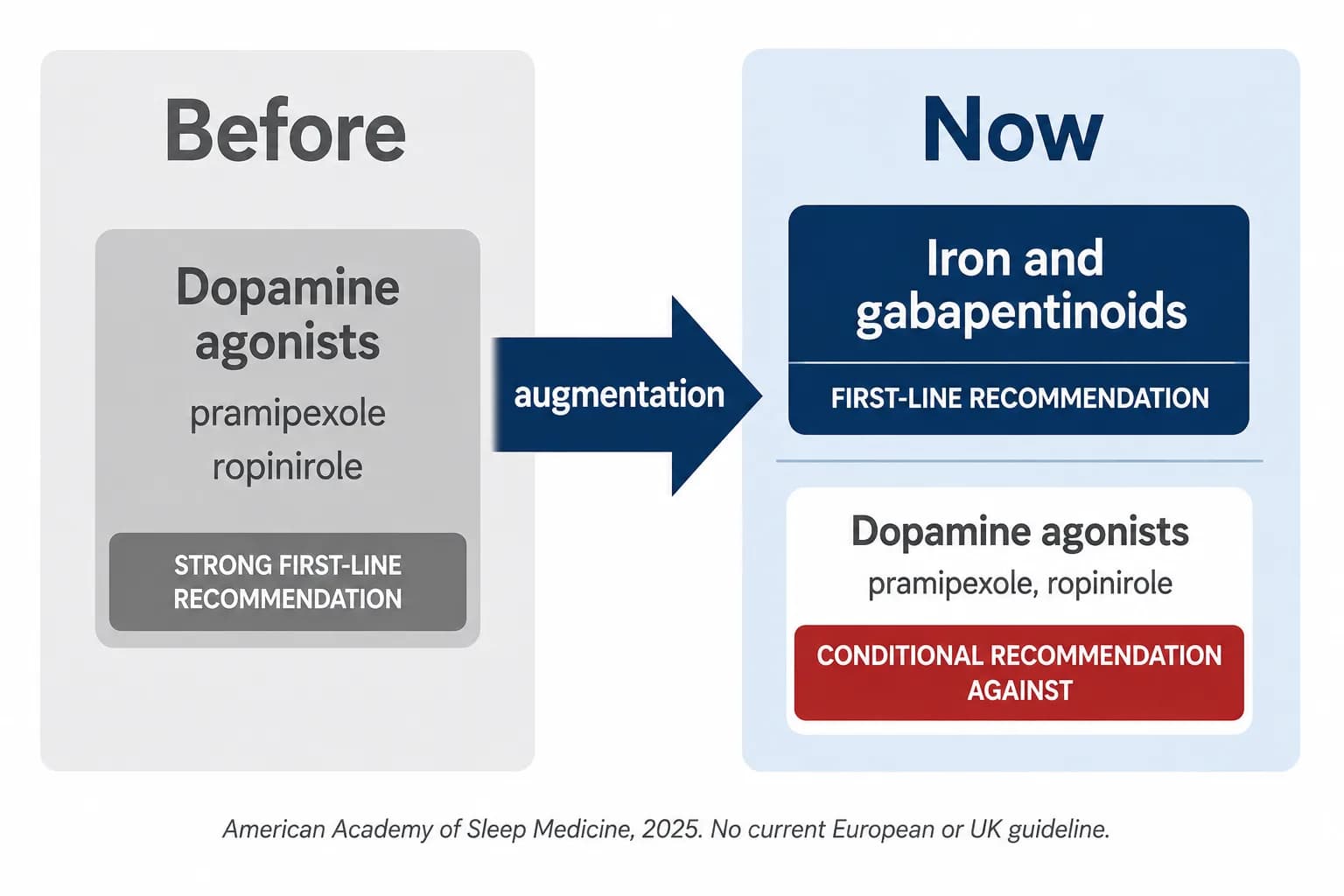
The treatment for restless legs syndrome has recently changed. While many websites still list the older treatment methods, sleep medicine specialists have moved away from them. The change is described further down this page.
What restless legs syndrome actually is
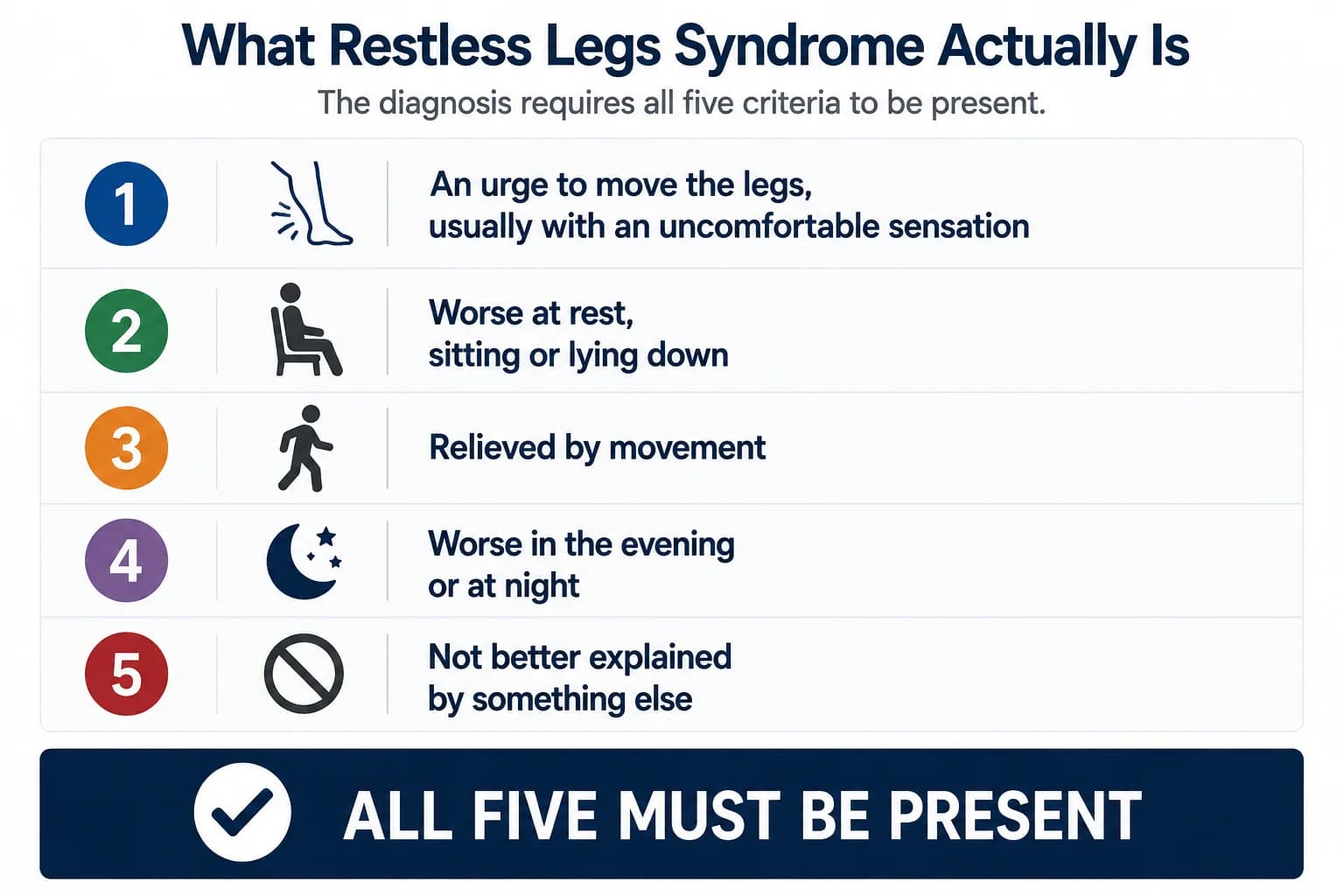
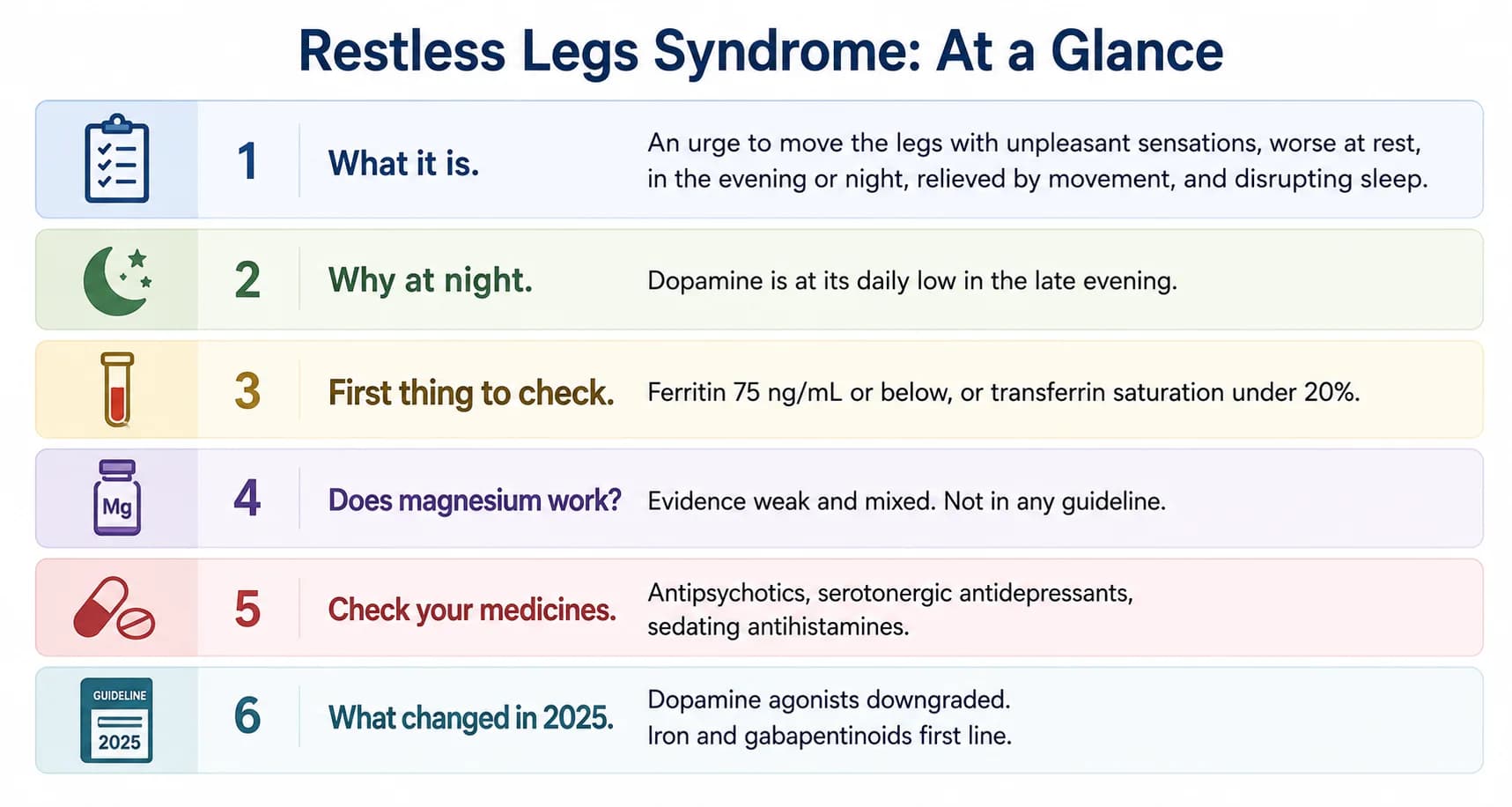
There is no test for it. It is diagnosed on a pattern of five features, and all five have to be present.
There has to be an urge to move the legs. It generally comes with an uncomfortable sensation rather than pain. The urge appears or gets worse when a person is resting, whether sitting or lying down. Moving the legs relieves the urge to move those legs. The discomfort is worse in the evening or at night than during the day. And it should not be better explained by something else, such as leg cramps, habitual foot tapping, or the discomfort of sitting in one position too long.
While there are many causes of uncomfortable legs at night, the five features together are what identify restless legs syndrome.
Why it is worse at night
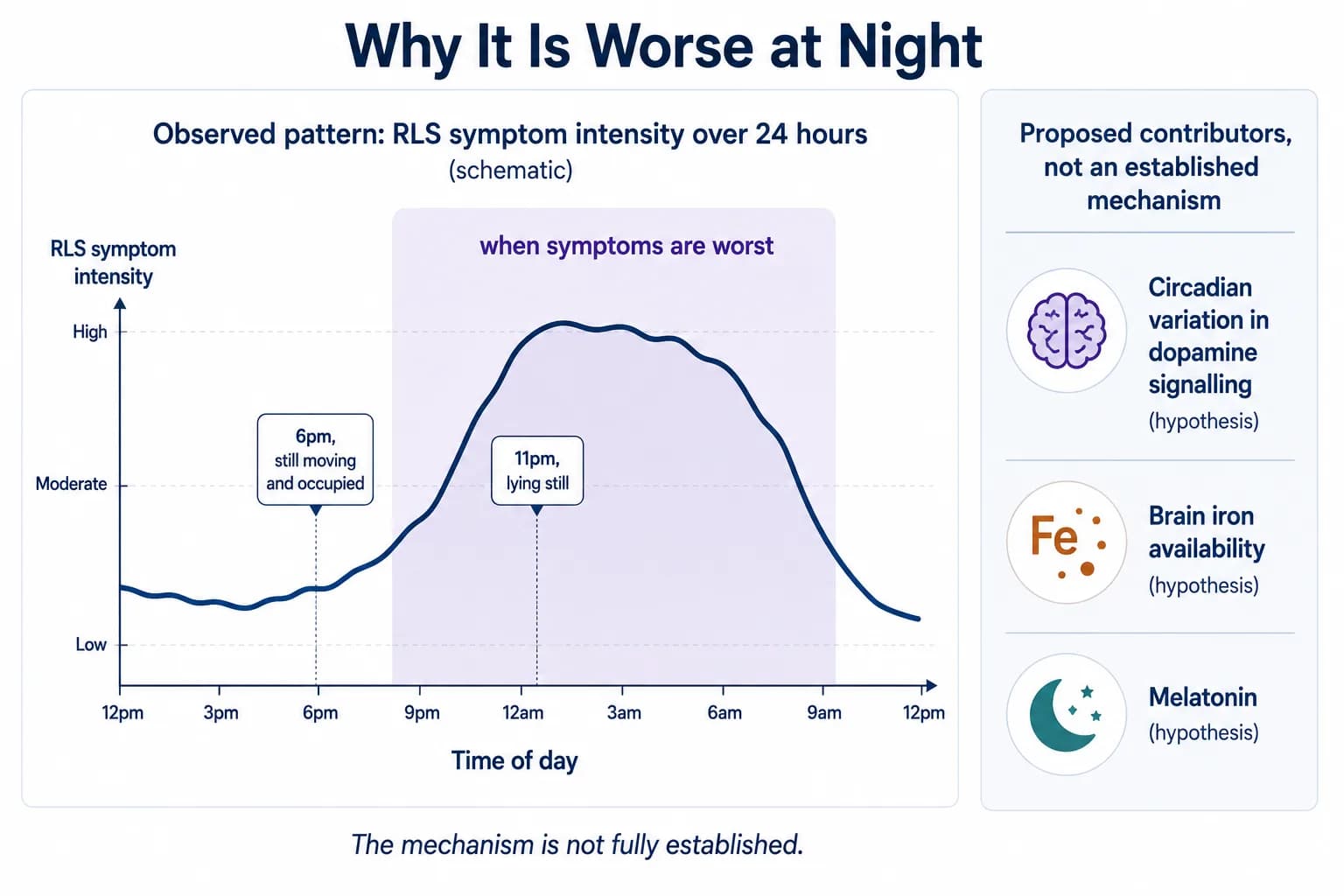
It is part of the condition, which is why the evening pattern is one of the five diagnostic criteria rather than an added detail.
Dopamine signalling in the brain follows a daily rhythm. Levels of dopamine fall to their lowest in the late evening and after sleep onset. Restless legs involves a problem with that signalling in the brain, which also explains why the symptoms follow a similar daily rhythm. Other elements that change in the brain and may contribute to restless legs include brain iron levels and melatonin. The exact mechanism behind restless legs is not yet established.
Two elements that hide the symptoms during the day are absent in the evening. When people stop moving and rest, this is when they experience the urge to move. When people stop engaging in activities, there is nothing competing with the sensations in the legs for their attention. A sensation that may be felt at six in the evening while cooking may be more prominent at eleven at night when lying still.
What it feels like
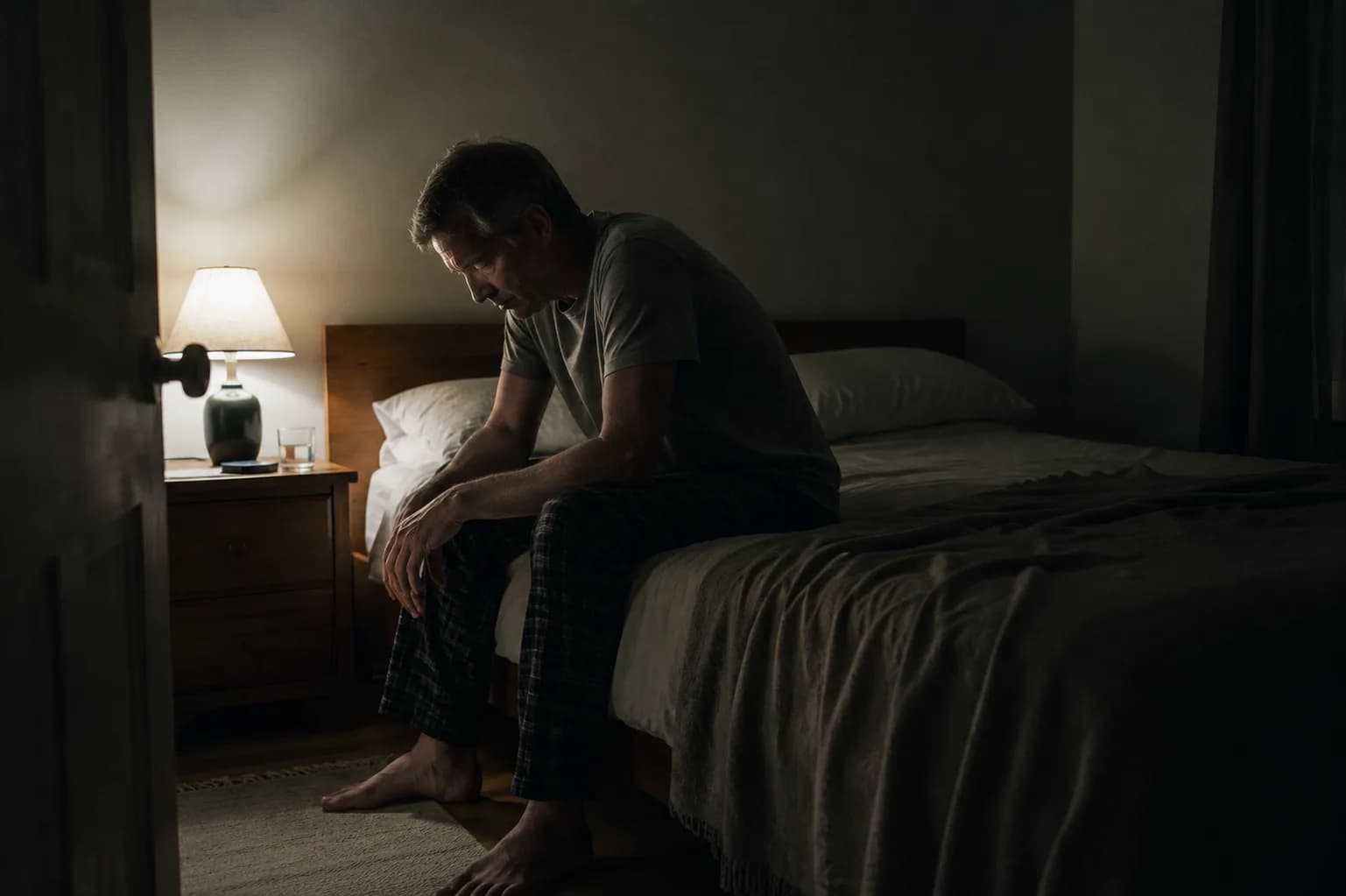
People use the same handful of descriptions. Crawling, creeping, pulling or throbbing. An ache deep inside the leg. A fizzing or electrical feeling. Some people cannot describe it at all and simply say their legs will not stay still.
It is usually felt deep in the leg rather than on the skin, most often between the knee and the ankle, and it is normally in both legs. It can affect the arms, though that is less common and tends to happen later.
Movement relieves the symptoms. Getting up and walking relieves them, but they return when sitting down. The fact that movement relieves the uncomfortable legs is worth reporting to a doctor. This helps to separate restless legs syndrome from other causes of uncomfortable legs.
What causes it
Restless legs syndrome is divided into two kinds. The primary kind has nothing else behind it. This type generally starts earlier in life and runs in families. The secondary kind is caused by another condition altogether, which can usually be treated.
Low iron stores is the most common cause of restless legs syndrome. Kidney disease is another, particularly in people on dialysis. Another cause is pregnancy, and that one is usually temporary. Another cause is certain medicines, which are listed further down the article. Restless legs syndrome that begins in middle age or later, or that worsens quickly, is worth investigating.
Iron is the first thing to check
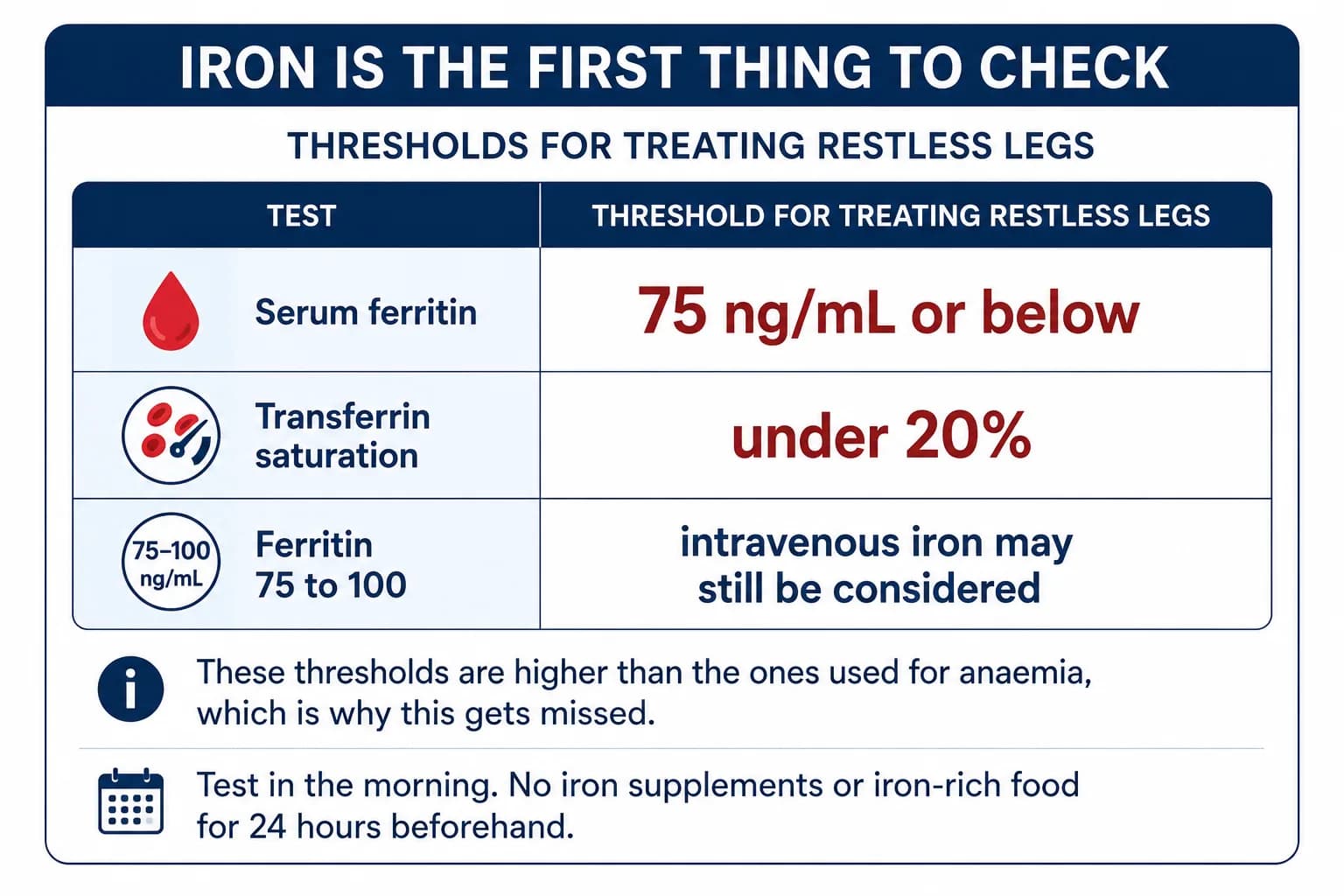

Iron is the first thing to check. Low iron in the brain is associated with restless legs. This is not the same as anaemia. There can be normal haemoglobin with low iron stores.
The tests for iron are serum ferritin and transferrin saturation. The thresholds for restless legs are higher than the threshold for anaemia, which is why it is often missed. Iron treatment is advised with ferritin levels of 75 ng/mL or below, or transferrin saturation of under 20 per cent. Between 75 and 100 ng/mL, intravenous iron may be advised. Even if the laboratory reports iron as normal, it could be low enough to cause restless legs.
The blood test for iron should be taken in the morning. Supplements and food sources of iron should be avoided for the twenty four hours before the blood test, as they can affect the result. Asking for a ferritin and transferrin saturation test is a reasonable request.
Does magnesium help?

Magnesium is the most heavily marketed answer to restless legs. The evidence for magnesium is weak and mixed.
A systematic review of studies of restless legs published in 2019 reached no conclusion either way. A larger review of ten randomised trials of 482 people published in 2024 found that both magnesium and vitamin B6 improved symptoms and sleep quality, with magnesium the more effective of the two. The authors put a caveat on their own finding: half of the studies carried a high risk of bias.
Magnesium might help restless legs. The trials that appear to show it are small in scale and of uneven quality. There is no treatment guideline that recommends magnesium as an option. It is an inexpensive treatment that poses little risk, which is why it is often tried. Magnesium is not a substitute for having iron levels checked.
The same is true for vitamin B12 and vitamin D. If levels of these vitamins are found to be low and corrected, that is worthwhile. Taking these supplements when they are not lacking in the body is not a treatment for restless legs.
Medicines that can make it worse
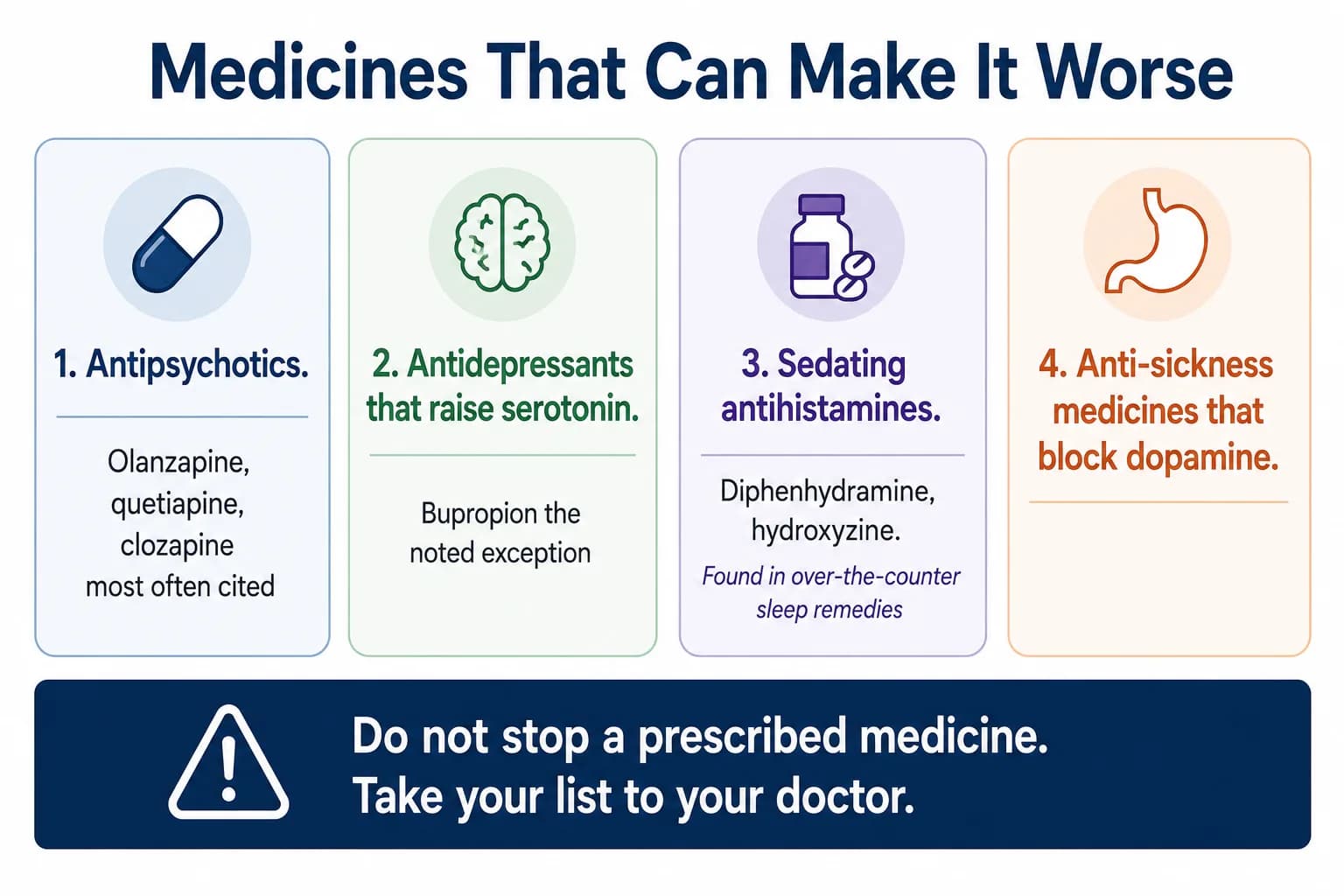

This section is the one most often missed, and for some people it is the whole answer.
Antipsychotics are the group most often reported, and the ones most often cited are olanzapine, quetiapine and clozapine. The reason why antipsychotics do this is not fully understood. Quetiapine has a low affinity for the dopamine receptor that the usual explanation relies on. Disrupted iron metabolism has been proposed as an alternative.
Antidepressants that raise serotonin can worsen restless legs syndrome. Not all antidepressants do this. Bupropion is the noted exception, because it acts on dopamine and noradrenaline.
Sedating antihistamines, including diphenhydramine and hydroxyzine, can make it worse. These are sold without a prescription in sleep remedies. A person purchasing one of these medicines to assist with sleep may find that it worsens their restless legs symptoms.
Anti-sickness medicines that block dopamine belong to the same group. None of this suggests the need to stop prescribed medicines without consulting a doctor. It does suggest presenting a list of the medicines a person is taking to a doctor, to determine whether one of them could be causing the symptoms. In that case the solution may be a change of medicine rather than the introduction of an additional one.
What changed in 2025
For years the standard treatment has been a dopamine agonist, such as pramipexole or ropinirole. Most information found online still recommends this treatment, though it is out of date.
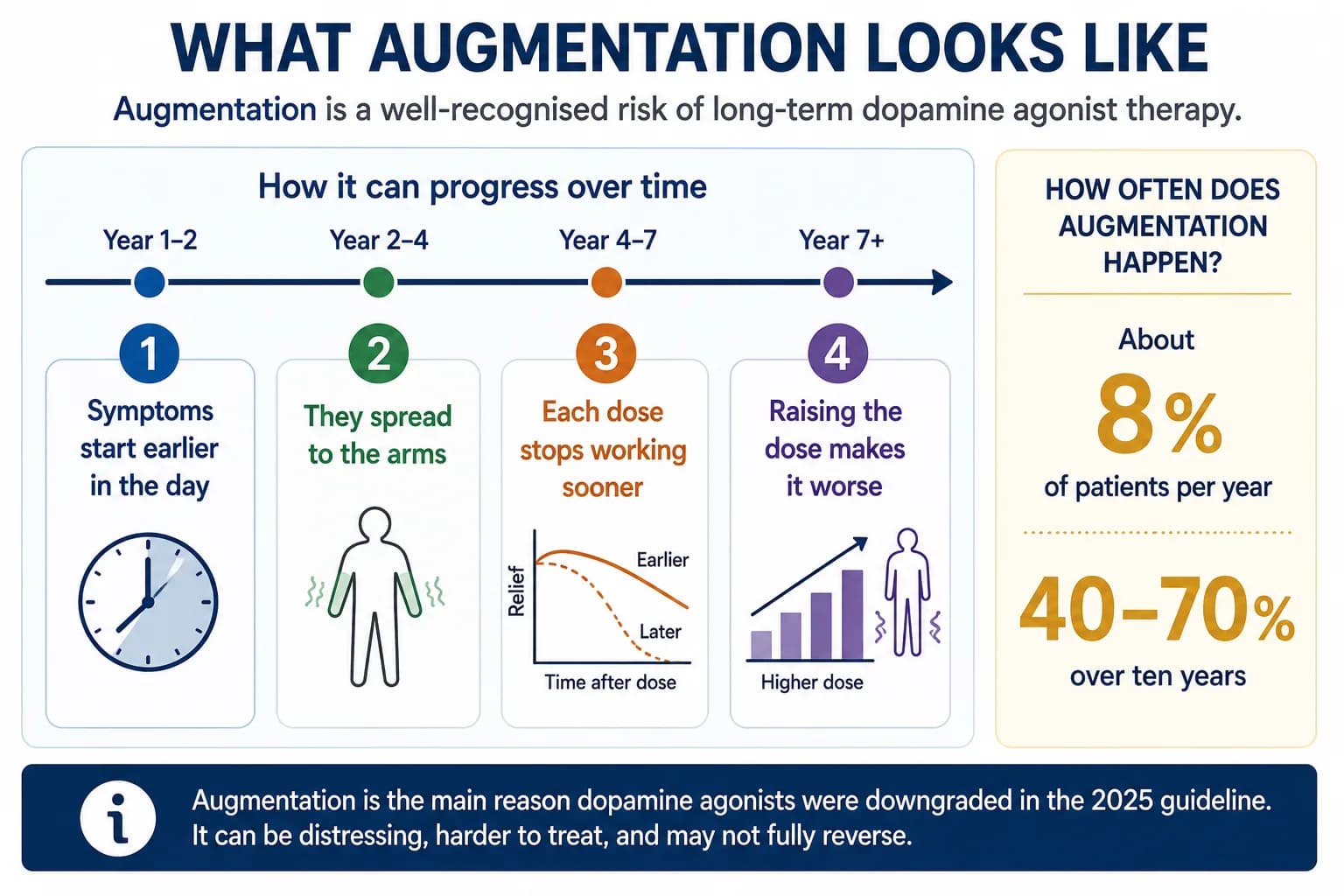
According to the American Academy of Sleep Medicine, which published a clinical practice guideline in 2025, dopamine agonists have been downgraded to a conditional recommendation against their use. Previously, they were recommended strongly. The reason for this is a phenomenon known as augmentation.
Augmentation is the phenomenon whereby the treatment makes the restless legs syndrome worse over time. Patients experience onset of symptoms earlier in the day, the symptoms may spread from the legs to the arms, and the effectiveness of each dose diminishes over time. Increasing the dose can make the symptoms worse.
About eight per cent of patients who take these drugs experience augmentation each year. Between forty and seventy per cent of patients who take them develop augmentation after ten years of treatment.
Treatment with iron and gabapentinoids has replaced dopamine agonists as the first line of treatment. Gabapentinoids include gabapentin, gabapentin enacarbil and pregabalin.
Two things need saying about that, and most pages leave both out.
The guideline is American. There is no current European or UK guideline on treating restless legs syndrome. The American Academy of Sleep Medicine document is the standing authority by default.
And it does not map neatly onto what a European patient can be prescribed. Gabapentin enacarbil has never been authorised in the EU at all. Gabapentin and pregabalin are both available here, but neither is licensed for restless legs, so any use for it falls outside the terms of the authorisation. A doctor who knows the patient's history is the one who should decide whether any of these medicines is used.
What you can do about it
Alongside getting your iron checked and reviewing your medicines, a few routine changes are worth making.
Caffeine, alcohol and nicotine make restless legs worse for many people. The timing of when those substances are taken is as important as the amount. Reducing them during the afternoons and evenings is easier than quitting them altogether, and two weeks is usually enough time to determine whether it has had an impact.
Moderate regular exercise helps, while heavy exercise late in the evening tends to make that night worse. Keeping consistent sleep and waking times helps too, partly because the condition is tied to the body clock in the first place.
Noting the changes made and keeping a record of how the following fortnight went is useful. The symptoms tend to vary from night to night, so written notes are more reliable than memory and more useful to the doctor treating the condition.
When to see a doctor
Occasional restless legs, such as after a long flight, is not the condition. Seeing a doctor is worthwhile in cases where restless legs occurs most nights, where it regularly costs sleep, where it has become more widespread, or where it has recently started in adult life without an obvious reason.
Ask for your iron studies, meaning ferritin and transferrin saturation, and take a list of everything you take, including anything bought without a prescription.
Frequently asked questions
Is restless legs syndrome the same as leg cramps?
A cramp is a painful contraction. The muscle becomes hard to the touch. It lasts from a few seconds to a few minutes and goes away on its own. Restless legs is an urge to move rather than a pain, there is nothing to see, it can go on for hours, and it eases when you move rather than passing by itself. Cramps keep people awake because of the pain. Restless legs keeps people from getting to sleep in the first place.
What helps restless legs at night when it is happening?
Movement helps restless legs. Walking about or stretching the legs will help while it is being done. A hot bath before bed helps some people and a cool shower helps others. Rubbing the legs or applying heat or cold can also help. These are not treatments for restless legs. Doing them every night is a reason to have iron levels checked.
Can restless legs syndrome be cured?
The secondary form can usually be resolved once the cause of the restless legs syndrome is treated. This is true of restless legs caused by low iron, certain medicines, or pregnancy. Primary restless legs is a long-term condition that generally cannot be cured, though it can be managed very well. Knowing which kind of restless legs a patient has is more important than simply attempting to treat the symptoms.
Why do restless legs happen in pregnancy?
Restless legs are common in pregnancy, especially during the third trimester. The increased demand for iron in the body during pregnancy is thought to be the main reason, and falling iron stores are closely linked to restless legs. The changes in hormones during pregnancy may also contribute. Restless legs during pregnancy generally resolves on its own within days or weeks after the baby is born. Most medicines that are used to treat restless legs are not appropriate for use during pregnancy. Instead, the focus is placed upon the iron levels of the mother and on measures that do not involve medicines. It is worth discussing with a doctor during an antenatal appointment.
Is periodic limb movement disorder the same as restless legs?
While these two conditions are related, they are not the same. Restless legs is experienced when a person is awake. It is an urge to move that the person can describe. Periodic limb movement disorder features repetitive movements of the legs while sleeping. The sleeper is usually unaware of them, and it is often the person next to them who notices. Many people who have restless legs also experience these movements while sleeping. Periodic limb movement disorder is diagnosed during a sleep study. Restless legs is diagnosed through the patient describing their symptoms.
Is restless legs syndrome hereditary?
In many instances, if the symptoms began before the age of forty or so, a relative with the same problem is common. The usual pattern is early onset of the problem with a family history of the disorder. It does not follow that the condition will be identical among relatives, since the severity of the disorder and the age at which it begins to manifest itself may differ within the same family. If a parent or sibling has restless legs, it is worth mentioning to the doctor, because it supports the diagnosis.
Can sleeping tablets help with restless legs?
Sleeping tablets may help a person to sleep. They do nothing to address the underlying condition. A sleeping tablet will not stop the restlessness that comes with the condition, even if the person feels sedated after taking it. Some sleep remedies that are available over the counter and contain antihistamines may make restless legs syndrome worse. Treating the sleep problem while ignoring the reason for it also delays the iron test that might have answered the whole question.
Does restless legs syndrome get worse with age?
Restless legs tends to worsen with age. Symptoms become more frequent with time, and tend to begin earlier in the evening than they used to. Restless legs that develops later in a person's lifetime tends to worsen at a faster rate than the early-onset kind that runs in families. The worsening is not steady, and periods of improvement can occur. A rapid change in symptoms points to a secondary cause, such as low iron or a medicine, rather than the ordinary course of the condition.
About this information
The prevalence figures, diagnostic criteria, iron thresholds and augmentation rates included on this page are from published research and from the 2025 clinical practice guideline of the American Academy of Sleep Medicine. The guideline is identified as American in the text because there does not currently exist a European or UK guideline on the topic. Where there is no current consensus, as with magnesium and with the mechanism behind antipsychotic-related symptoms, the page makes note of that fact. The two checks described above, the blood tests and the medicines list, answer the question for a substantial number of people.
Licensing is not the same thing as clinical guidance, and both differ between countries, so what is authorised where you live may not match what a guideline recommends.
Reviewed by Euro Pharma Care Team