

What is diabetic peripheral neuropathy?
The full name describes the pattern. Peripheral refers to the fact that the affected nerves lie outside the brain and spinal cord. Neuropathy indicates that these nerves have been damaged. Diabetes has a very common form of this type of neuropathy which is both distal (farther away from the center of the body) and symmetric (affecting both sides). This condition most often starts in both feet, but can extend upward through the lower legs. Symptoms can also appear in the hands after they have extended high enough in the legs to produce the well-known "stocking-and-glove" distribution. A single hand with no sensation, or a single leg with weakness does not follow this typical pattern and warrants a broader investigation into possible causes.
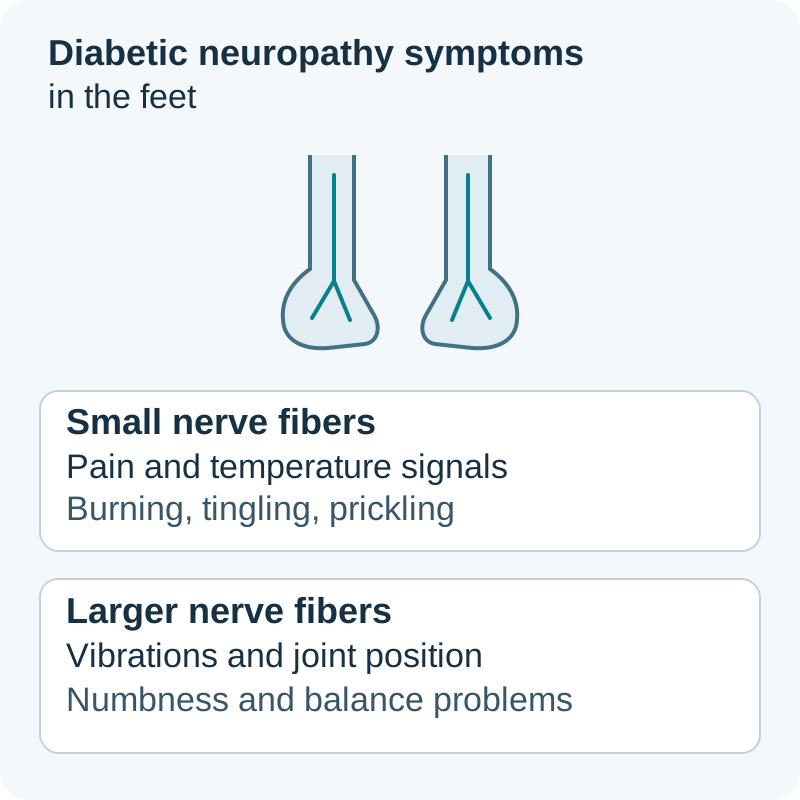
Diabetic neuropathy symptoms in the feet
The first symptoms usually involve the small nerve fibers. These fibers transmit pain and temperature signals to the brain. If they fail, people may experience burning, tingling, prickling, over-sensitivity to touch and sometimes sharp stabbing pains. For example, some individuals experience discomfort when bed sheets rub against their feet. The larger nerve fibers transmit information regarding vibrations as well as the position of a person's joints. If these fibers are damaged, people may describe their feet feeling "wooden" (or numb), have trouble walking in the dark and are at greater risk of falling. As the damage progresses, individuals may lose their protective sensations. Once individuals lose their protective sensations, they can be injured by things like a small rock inside their shoe, a crack in dry skin or taking a hot bath; however, they do not feel the pain that typically causes an individual to stop doing what they are doing.
Why diabetic nerve pain can feel worse at night
Pain often feels worse at night; however, "night" is not a separate form of neuropathy. During the day, we have multiple distractions (movement, speech, vision) that draw our focus away from the signals coming from our feet. At night, our feet are usually at rest and we do not have many distractions. Also, warm bedding and gentle touch can increase awareness of the hypersensitivity of our skin. Repeatedly waking up due to pain is an important issue on its own. Clinicians should evaluate both sleep and mood when evaluating patients for pain, since each can reinforce the other and a treatment option chosen may impact both.
How doctors separate diabetes from other causes
Diabetes alone does not confirm the cause of nerve symptoms. A diabetic person can also experience other conditions such as: a trapped nerve; a vitamin deficiency; thyroid disease; kidney disease; an alcohol-induced neuropathy; or damage caused by chemotherapy. Specifically, if a person has taken Metformin for a long period of time, then they should be tested for a Vitamin B12 deficiency. Additionally, the progression of symptoms provides another indication. Damage due to Diabetes usually progresses slowly and symmetrically from the toes upward. However, if a person experiences a rapid onset of symptoms, significant weakness, symptoms on one side of their body only, or symptoms that occur at a higher level than expected, these are indications that additional investigation needs to be conducted beyond simply attributing the symptoms to diabetes.
How diabetic peripheral neuropathy is tested
Screening is not dependent upon a scanner. Current neuropathy screening guidance begins with a history and some basic bedside tests. A pin or warm/cool object will evaluate the smaller fiber nerves. A vibrating tuning fork will evaluate the larger fiber nerves. A thin calibrated filament applied to the foot will determine if there has been loss of protective sensation. This final test is a great tool in identifying feet which may be prone to injury; however, it alone can be insufficient to detect early stages of the disease. If the results are inconclusive or atypical, then electrical nerve testing or imaging may be utilized.
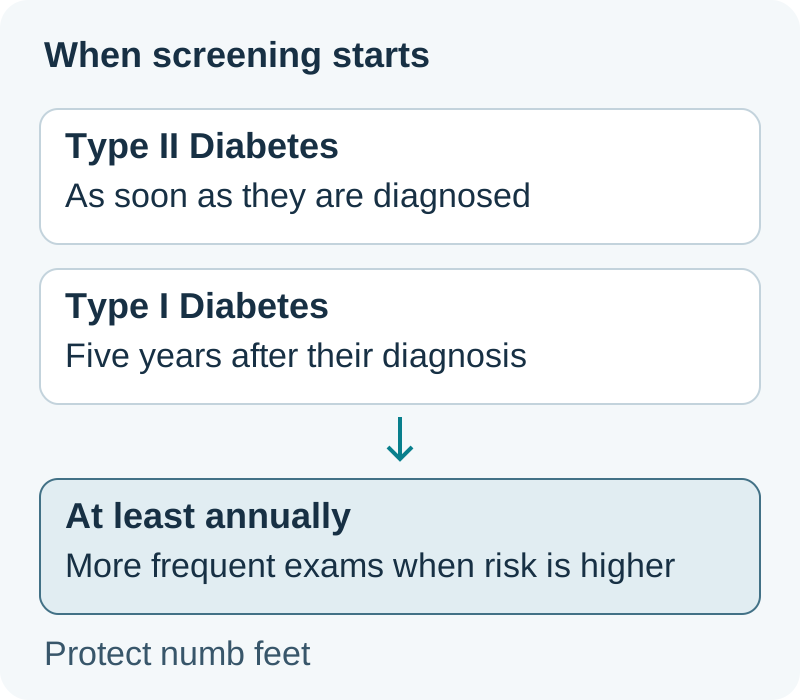
When screening starts
Timing is based upon what form of diabetes you have. For people with Type II Diabetes, neuropathy screening starts as soon as they are diagnosed; as the increased glucose levels can exist without people being aware of them for many years. On the other hand, for people with Type I Diabetes, routine neuropathy screening starts five years after their diagnosis. Once both populations begin testing, they will need to be tested at least annually. When conducting a foot exam, it's not just testing for sensation. The examiner will also look at the condition of the skin on your feet, the structure of your feet, how well fitting your shoes are, and your blood supply to your feet. If a person has already lost protective sensation in their feet, has had a foot ulcer, or has had part of their leg/foot amputated, then that individual will require more frequent exams than those that are performed on an annual basis.
Can diabetic peripheral neuropathy be reversed?
No treatments exist to regenerate existing lost nerve cells due to diabetes. Glucose control can either delay or prevent diabetic neuropathy in type 1 diabetics and may slow its progression in people with type 2 diabetes; however, glucose control cannot make a previously numb foot feel like a healthy, normal foot again. Other factors such as blood pressure, cholesterol, body weight and whether you smoke also affect your feet because these factors also affect the blood vessels supplying the nerves. Therefore, there are two distinct ways in which treatment for diabetic neuropathy can help. First, treatment can help to prevent additional damage from occurring. Second, treatment can help to address the pain or lack of sensation that is already occurring.
Diabetic neuropathy treatment: realistic goals

Pain can be measured through what you can do (i.e. your function) in addition to how much pain you feel. For example, if you can now sleep better, walk farther, or wear shoes without them hurting; then you are achieving a good outcome regardless of whether there is still pain present. Generally speaking, in clinical trials when people experience a decrease in pain of approximately 30%, it is considered a significant improvement. It is much more reasonable to suggest that pain will decrease rather than disappear. There are four types of medications that have been shown to help with painful diabetic neuropathy: Gabapentinoids; Serotonin-Noradrenaline Reuptake Inhibitors; Tricyclic Antidepressants; and Sodium Channel Blockers. None of these four groups of medications are guaranteed to be the best first choice. Your doctor will use factors such as your kidney function, sleep quality, mood, other medications you take, and potential side-effects from each of these categories to determine which group of medications is most appropriate for you to begin taking.
Where pregabalin and gabapentin fit
The drugs called pregabalin and gabapentin both fall into the drug class known as "gabapentinoids." Both of these medications help reduce the amount of chemicals released by over-active nerves; however, neither med repairs the damaged nerve. Pregabalin is currently licensed in Europe for treating peripheral neuropathic pain, including pain associated with diabetic neuropathy. In the peripheral neuropathic pain studies summarised by the European regulator, 35% of those receiving pregabalin reported achieving at least a 50% reduction in their pain scores. On the other hand, 18% of the subjects receiving a placebo reported similar results. Most frequent adverse effects include dizziness and somnolence (sleepiness), and changes in renal function determine the maximum possible dose.
| Treatment task | What current guidance says |
|---|---|
| Slow further damage | Manage glucose; also address weight, blood pressure, cholesterol and smoking |
| Reduce neuropathic pain | Initial evidence-based classes include gabapentinoids, SNRIs, TCAs and sodium-channel blockers |
| If the first class fails | Try a different effective class; consider a different-class combination for a partial response |
| Set expectations | Better sleep, walking and daily function matter; complete pain relief is uncommon |
| Avoid as routine treatment | Opioids, including tramadol, because long-term benefit is weak and harms accumulate |
| Protect numb feet | Annual comprehensive review, more often when risk is higher, plus daily self-checks |
If the initial medication has not been effective enough, or if it has produced unwanted side effects, then there is some evidence to suggest that a clinician should consider a medication from a different effective class as opposed to continuing to prescribe virtually identical types of medications. A clinician may be able to build on a partial response by adding a medication from a different class. The most obvious exception to this rule would be opioids. Current diabetes and neurological guidelines recommend against routinely using opioids (such as tramadol) to treat painful diabetic neuropathy, as they produce little long term benefit while causing many harmful effects. You can also make a patient's experience of pain more tolerable by treating both sleep disturbance and depression at the same time, without implying that these issues were the source of the patient's nerve damage.
The painless form and daily foot checks

A painless condition puts you at greater risk for serious foot problems. Up to half of people with this nerve-damage pattern may have no symptoms; however, numb skin does not report when it rubs against something, gets hot or has a small injury. This is why checking your feet each day should be done as a practical matter, not just as a ritual. Check the areas between the toes, around the heel and across the bottom of the foot. You may need to use a mirror to view areas of the foot that are difficult to see. Before putting on shoes, make sure to examine the inside of them. Also, do not walk barefoot if you cannot feel what is underneath your feet. Lastly, calluses and ingrown toenails are conditions that should only be treated by professionals who are knowledgeable about treating high-risk feet.
Foot changes that need prompt assessment

Changes in temperature, color, or shape of the foot may be indicative of a potential problem before there is pain. If the foot is warm, red, or swollen, if the skin is broken, if there is discharge, if you notice a dark area on the foot, or if you develop a new deformity, you should have your foot examined as soon as possible. Some possible reasons for these types of changes include Charcot arthropathy, in which the foot cannot feel pain; therefore, the bones can break and deform the foot without causing much pain. Also, an ulcer or infection can form under callus, and waiting until it begins to hurt defeats the purpose of examining a numb foot. Photographing changes when you first observe them can demonstrate how fast they occurred; however, photographs cannot substitute for an examination.
Therefore, the relevant questions to ask are fairly specific. Are you feeling this in both feet? Did you first feel it in your toes? Do you have burning pain, numbness (lack of sensation), or both? Have you experienced changes in your ability to balance? Do any parts of your shoes rub on your feet? Has the skin on either of your feet cracked? You should be prepared to discuss these things as well as bring a list of medications you currently take and your medical history regarding diabetes to your next appointment. The goal of this evaluation is not just to assign a name to the condition. This process will help distinguish diabetic nerve damage from other conditions that can be treated, allow you to protect a foot that no longer provides you with warnings when there may be injury, and determine the most appropriate method for providing pain relief based upon the improvement of your quality of life.
Frequently asked questions
What is diabetic peripheral neuropathy?
It is diabetes-related nerve damage that usually begins in both feet and progresses upwards. A painful type can cause burning, tingling or shooting pain. A non-painful type may result in numbness, and a loss of temperature or pressure sensation. These two types are both part of the same length-dependent pattern, and they are both important because of the increased probability that a foot injury will not be noticed due to decreased sensation.
What does diabetic neuropathy feel like in the feet?
Some people experience burning, electric shock-like sensations, pin-and-needle sensations, stabbing sensations, prickling sensations, or pain on light touch. Some people experience deadness, thickness, or wood-like sensation rather than pain. The first symptoms generally occur in the toes and soles. If you are experiencing balance problems or you have an unsteady gait, it is possible that larger sensory fibers are now being affected.
Can diabetic peripheral neuropathy be reversed?
Nerve damage caused by diabetes is usually permanent. However, managing blood sugar levels and cardiovascular health can help to either prevent or slow down additional nerve damage, or at least slow its development, based upon which form of diabetes an individual has. Pain may disappear even if there is still a loss of sensation. It would be wrong to assume that if pain disappears suddenly that the nerves are now healthy again; as the amount of numbness increases, pain can disappear as well.
Why is diabetic nerve pain worse at night?
The pain is more easily recognized when the individual is stationary, and the surroundings are quiet; even very light pressure from bedding can cause irritation to highly sensitive skin. Additionally, nighttime pain can interfere with sleeping, and this can make it difficult for an individual to cope with pain the next day. A pattern of pain that occurs at night does not alone provide a diagnosis for the cause of pain, rather, a diabetic neuropathy diagnosis will be based on the complete patient history, physical examination, and elimination of other possibilities.
Is diabetic peripheral neuropathy the same as diabetic neuropathy?
The peripheral form is the most typical symmetrical nerve-damage pattern that results from diabetes. Diabetic neuropathy is the larger family of nerve conditions and also includes autonomic nerve damage that can impact heart rate, blood pressure, digestion, bladder function, perspiration and sexual performance. Many people refer to these two forms as being synonymous; however, the peripheral form is simply one member of the larger family.
Does pregabalin cure diabetic neuropathy?
Pregabalin can help relieve diabetic nerve pain for some individuals; however, pregabalin cannot fix damaged nerves nor restore sensation that was lost. The European regulator's peripheral neuropathic pain studies found that 35% of participants taking pregabalin achieved at least a halving of their pain score, compared with 18% taking placebo. Some common side effects include dizziness and drowsiness. The dose must account for an individual's kidney function. Pregabalin is one option among several medicine classes used for diabetic nerve pain and is not necessarily the first option for every patient.
Have questions?
Contact Euro Pharma Care.
Contact usReviewed by Euro Pharma Care Team